Why Your Analytics Undercount AI Traffic 6 to 1

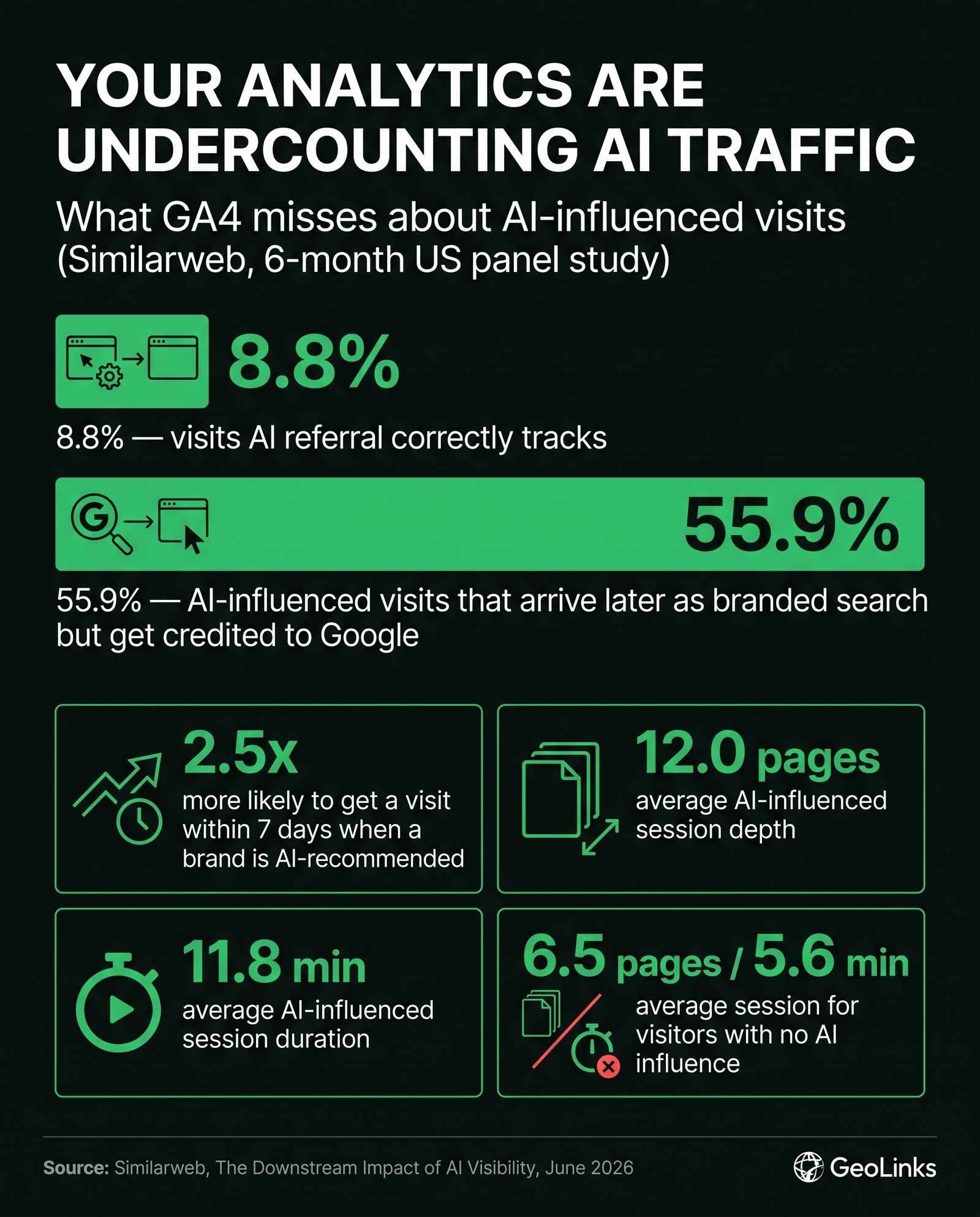
Similarweb spent six months watching real US desktop user journeys and found that GA4’s “AI referral” channel captures just 8.8% of the traffic AI actually influences. The other 55.9% shows up days later as branded search and gets credited to Google. Brands ChatGPT or Gemini recommend get 2.5 times more visits within a week, and those visitors browse twice as many pages. If your dashboard says AI sends you almost nothing, the dashboard is the part that’s wrong.
Key takeaways
- Similarweb’s six-month US panel study found only 8.8% of AI-influenced visits arrive as a direct AI referral in standard analytics.
- 55.9% of that same influenced traffic shows up later as branded organic or paid search, credited to Google, not to the AI platform.
- Brands recommended by ChatGPT or Gemini get 2.5x more site visits within the following seven days.
- AI-influenced visitors view 12.0 pages and spend 11.8 minutes on site, against 6.5 pages and 5.6 minutes for everyone else.
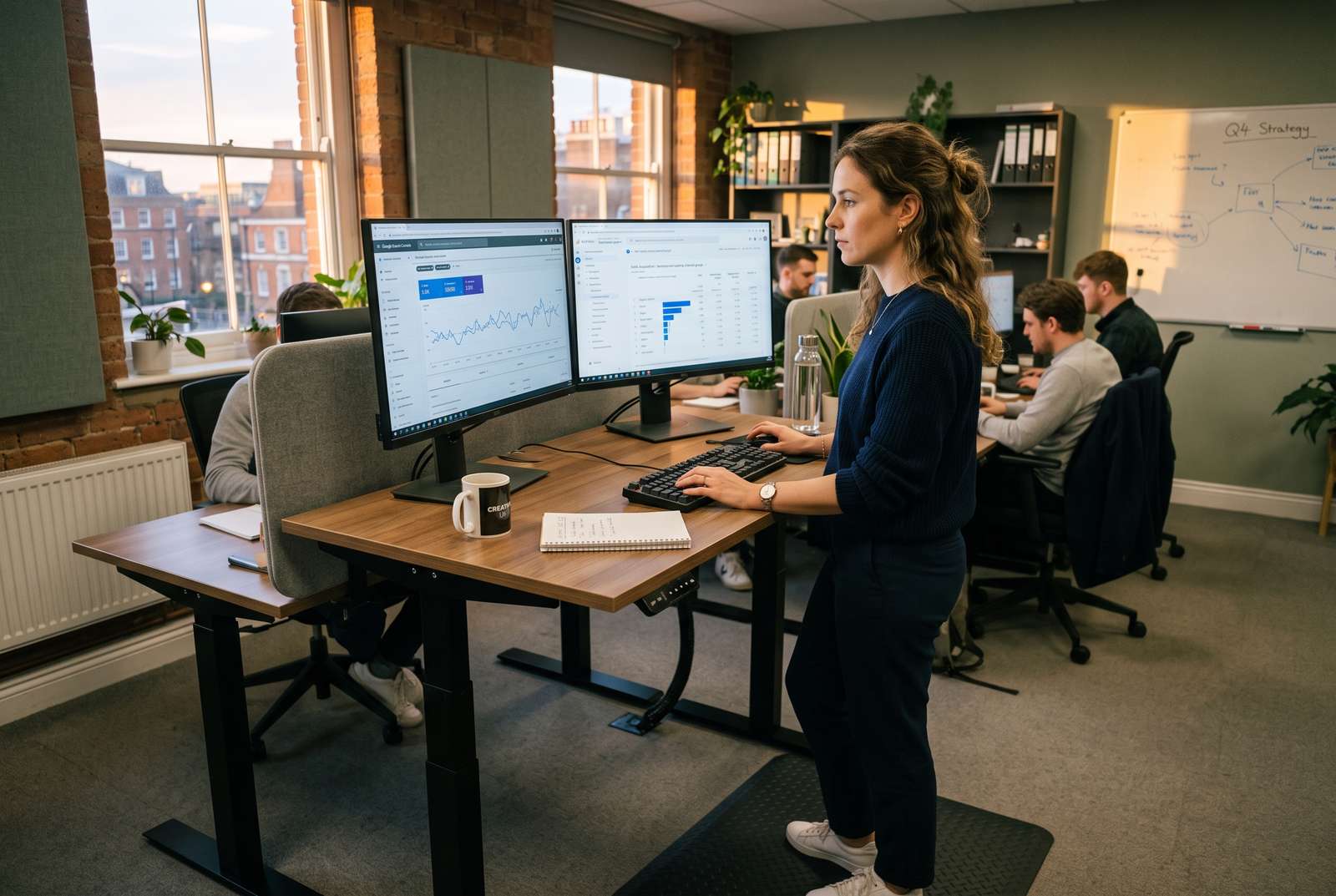
- We found the same pattern auditing a UK client’s GA4 against their Search Console branded-query data this quarter.
The 8.8% number that breaks the “AI sends us nothing” objection
Every sales call in this category runs into the same line: “our analytics show almost no traffic from ChatGPT, so why would we pay for this.” Similarweb’s “The Downstream Impact of AI Visibility” report, published 21 June 2026, is the first study to trace that objection back to its source using real user panel data rather than survey answers.
The methodology tracked six months of US desktop journeys and matched exposure to an AI-generated brand recommendation against what that same user did next, across every channel, not just the click that followed immediately. The finding: GA4’s AI referral line only catches the 8.8% of AI-influenced visits where someone clicked a link straight out of the answer. The other 91.2% happens through a channel your dashboard already tracks, just under the wrong label.
Where the missing 91% actually goes
| What GA4 shows | What Similarweb found is really happening | How to catch it |
|---|---|---|
| AI referral (chatgpt.com, perplexity.ai, etc.) | The 8.8% who clicked straight from the answer | Already correct, add referrer regex to confirm the full set |
| Organic or paid branded search | 55.9% of AI-influenced visits, arriving later as a brand-name search | Cross-reference Search Console branded-query volume against AI-mention timing |
| Direct traffic | AI-influenced brand recall with no logged referrer at all | Watch for direct-visit spikes after a known AI mention event |
| Social or app referral | Visits from someone sharing or screenshotting an AI answer | Check referrer domains against known AI-app share destinations |
The pattern repeats across every UK account we have audited: a brand gets recommended in an AI answer, the user closes the tab, and comes back a day or two later by typing the brand name into Google. GA4 logs that as organic branded search. Nothing in the dashboard ties it back to the AI conversation that caused it.
What AI-influenced visitors actually do once they land
The undercount is not just about volume, it understates value too. Similarweb’s panel showed AI-influenced visitors averaging 12.0 pages and 11.8 minutes per session, roughly double the 6.5 pages and 5.6 minutes logged by visitors with no AI exposure. Brands that get named in an AI answer also see a 2.5x lift in the odds of a visit within the following seven days.
That combination, more likely to visit and more engaged once they arrive, is the opposite of what a near-zero AI referral line implies. The channel your dashboard flags as negligible is quietly producing your best sessions, filed under a different name.
How we found the same gap on a client audit
We ran this exact check for a UK client earlier this month. Their GA4 AI referral channel showed single-digit sessions over 90 days, the number the owner had been pointing to as proof AI search was not worth budget. Pulling their Search Console branded-query report for the same window told a different story: branded impressions and clicks had climbed in the two weeks after their brand started appearing in ChatGPT comparison answers for their category, a lift the AI referral line never recorded. It is the same mechanism behind the 727 to 6,370 monthly organic visit jump we produced for Garden Ornaments over seven months, much of that growth arriving as branded and direct traffic that no single dashboard line labelled “AI.”
The fix is not a new tool. It is treating the AI referral number as a floor, then checking branded search and direct traffic for the same lift before deciding AI search sends you nothing.
- Set up referrer regex for the major AI domains in GA4 so the direct-click 8.8% is captured accurately, not scattered across “(not set)”.
- Pull your branded-query volume from Search Console for the weeks after any known AI mention or citation event.
- Compare timing, not totals. A branded-search spike within days of a citation is the tell Similarweb’s data points to.
- Check session depth and duration on the branded-search segment against your site average. AI-influenced visitors read more.
- Re-run the check monthly. Attribution drift compounds as more of your category-relevant queries move to AI-first research.
Multi-engine reality check
Similarweb’s panel covers AI-influenced behaviour broadly, but the attribution gap plays out differently by engine. ChatGPT, still the largest share of AI-influenced traffic, drives the bulk of the branded-search delay pattern because most sessions end without a clicked source link. Claude and Perplexity attach more visible citations per answer, so a larger share of their influence does show up as a direct AI referral, though still well under half. Gemini and Google AI Mode blend into your existing Google organic numbers entirely, since both live inside the same search surface GA4 already tracks as organic. Microsoft Copilot’s traffic mostly arrives through Bing and Edge referrers that rarely get flagged as AI-specific. Grok’s influence tends to show up as X or direct traffic with almost no referrer data at all. None of these gaps close by picking one engine to watch. They close by tracking branded search and direct-visit timing across all of them.
Common questions
Why doesn’t GA4 show AI referral traffic properly?
GA4 only counts a visit as an AI referral when someone clicks a link straight out of an AI answer. Similarweb found that path is just 8.8% of AI-influenced visits.
Where does the rest of my AI-influenced traffic go in GA4?
Similarweb found 55.9% of it arrives later as branded organic or paid search, credited entirely to Google or Bing, not to the AI platform that started the journey.
How much more does an AI-recommended brand actually gain?
Brands ChatGPT or Gemini recommend are 2.5 times more likely to get a site visit within the following seven days, based on Similarweb’s six-month panel study.
Do AI-influenced visitors behave differently once they land?
Yes. Similarweb found they view 12.0 pages and spend 11.8 minutes on average, against 6.5 pages and 5.6 minutes for visitors with no AI influence.
Can I fix this in GA4 myself for free?
Partly. Adding referrer regex for chatgpt.com, perplexity.ai, gemini.google.com and copilot.microsoft.com catches the direct-click share, but the branded-search share still needs manual cross-referencing.
Is Google Search Console’s new AI report the same fix?
It helps on the Google side only. It shows AI Overview and AI Mode impressions but says nothing about branded search lifted by ChatGPT, Claude or Perplexity.
Should I stop trusting GA4’s channel report altogether?
No, but treat the AI referral line as a floor, not a total. Similarweb’s data suggests the real AI-influenced share runs close to six times higher.
Related reading
- How to measure AI citations: a reporting template covers the wider tracking setup this attribution fix plugs into.
- Mentioned by AI, never cited: the 30% overlap problem explains a related gap between being named and being sourced.
- Google’s Generative AI report in Search Console is the free Google-side counterpart to the GA4 checks in this post.
- The ChatGPT Branded Link Update doubled referrals is the mechanism behind part of the direct-click 8.8%.
Run the free AI visibility check to see where your brand is already being recommended, then check our pricing if the branded-search lift is enough to justify tracking it properly every month.